Why Your Lawn Has Yellow Spots (And What's Actually Causing Them)
Pooper Dooper • April 2026 • Northern Colorado
The yellow circles on your lawn are almost always caused by dog urine, not dog waste. The high nitrogen and salt content in urine burns grass the same way an over-application of fertilizer would, leaving a dead center surrounded by lush, dark green growth. Below, we'll walk through what's actually happening at the soil level and the specific things that work in Northern Colorado lawns.
The Real Culprit: Urine, Not Waste
Dog urine is essentially concentrated nitrogen and salts. When a dog goes in the same general area repeatedly, those concentrated chemicals soak into the soil all at once, in one spot — hitting grass with the equivalent of a massive overdose of fertilizer. That overdose burns the roots and kills the grass in the center of the spot. But the urine also spreads outward as it diffuses through the soil, and at the edges, the nitrogen concentration is lower — just enough to act as a feed rather than a burn. That is why the dead center is almost always surrounded by a ring of unusually dark, lush green growth.
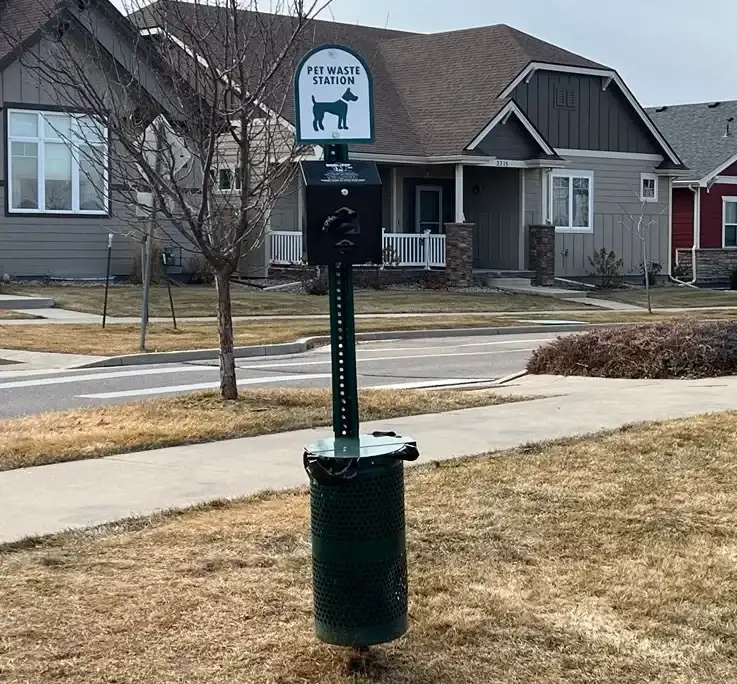
The Myths Worth Clearing Up
"It's the female dog's hormones."
Not exactly. The reason female dogs leave worse spots is the squatting behavior, not anything specific to their hormones.
"Tomato juice will neutralize the urine."
Most supplements have no real effect on lawn damage and some can be unhealthy for the dog. It is the volume of nitrogen and salts that burns — not the pH.
"Certain breeds don't cause spots."
There is no breed that produces dog urine without nitrogen. Smaller dogs cause smaller spots simply because of volume, not because of their breed.
"It's just bad grass."
The grass in the affected spot is fine — it is being chemically burned. Reseeding into the same spot without flushing the soil first will produce the same result.
What Actually Works to Prevent and Fix Yellow Spots
1. Keep Your Dog Well Hydrated
A well-hydrated dog produces more dilute urine, meaning less concentrated nitrogen hits any given spot. Always provide fresh water, refresh the bowl daily, and add an extra bowl in summer.
2. Rinse Fresh Spots With Water
Rinse the spot within an hour of your dog going to dilute the nitrogen before it burns the roots. A garden hose, watering can, or bucket of water all work.
3. Designate a Potty Area
Train your dog to use a specific corner of the yard. Mulch, gravel, or a designated grass area in a less-visible part of the yard absorbs the impact. Most dogs learn this within a few weeks.
4. Reseed Damaged Spots Properly
Rake out dead grass, water heavily for several days to leach excess nitrogen and salts, top-dress with fresh topsoil, then seed with a Northern Colorado-friendly cool-season blend (tall fescue or fescue/Kentucky bluegrass mix).
5. Pick the Right Grass
Tall fescue and perennial ryegrass are notably more resistant to concentrated nitrogen than Kentucky bluegrass. If reseeding a high-dog-use yard, lean toward a fescue-heavy mix.
6. Remove the Waste
Waste blocks sunlight, smothers surrounding grass, attracts dogs to use the same areas repeatedly, and contributes acidic compounds to the soil over time. A clean yard removes one layer of damage on top of urine.
What Does Not Help (Save Your Money)
Pills & Powders
Supplements that supposedly neutralize urine have no rigorous evidence behind the cosmetic claim.
Spray-On Lawn Treatments
"Urine repair" sprays mostly add a green dye — they do not actually fix the underlying soil chemistry.
Salt or Gypsum on the Spot
Adding salt or gypsum to a burned spot often makes it worse rather than better.
Unadvised Diet Changes
Switching dog food brands without vet input affects more than just urine and should not be made for cosmetic lawn reasons.
The Northern Colorado Wrinkle
Lawns in Fort Collins, Loveland, Timnath, Wellington, and Windsor face region-specific factors that make yellow spots more visible and more persistent than in wetter climates.
Alkaline, Clay-Heavy Soils
Urine salts hang around longer than they would in sandy, slightly acidic soils. Flushing requires more water and more patience.
Dry Summers & Missed Irrigation
Irrigation cycles often miss the corners where dogs spend the most time, leaving concentrated urine to sit longer without natural rinsing.
Kentucky Bluegrass Sensitivity
Older bluegrass-heavy lawns show yellow spots more dramatically than fescue lawns — and bluegrass dominates many older Northern Colorado yards.
Long Winters, Concentrated Damage
The yellow you see in April is often a record of the entire winter, all surfacing at once during thaw. Flushing fresh spots is harder when temperatures are below freezing.
Where Pooper Dooper Fits In
To be clear: a pet waste removal service does not directly stop yellow spots. The urine is what causes them, and we are removing the waste, not the urine. That said, our customers consistently tell us their yards look better overall after starting service.
Healthier Surrounding Grass
Grass surrounding urine spots is healthier when waste is not blocking sunlight on top of it. Healthier grass recovers faster from urine damage.
Breaking the Repeat-Spot Pattern
Dogs tend to redistribute where they go when waste is consistently removed, which can break the "same spot every time" pattern that produces the worst urine damage.
More Time in the Yard
Owners who are not avoiding the yard because of waste are more likely to use preventive techniques — water rinsing, designated potty areas, and keeping their dog hydrated.
Your Next Step
If you are looking at yellow circles right now and wondering where to start: make sure your dog has steady access to fresh water all day, try rinsing fresh spots for the next two weeks, pick one corner of the yard for your dog to use, plan to reseed the worst spots in September, and get on a consistent waste removal routine.
Weekly residential service starts at $12 per visit. No contract, ever. We bill monthly only after the work is done. Proudly serving Fort Collins, Loveland, Timnath, Wellington, Windsor, and surrounding Northern Colorado.