Pet Waste
Winter Pet Waste Service in Northern Colorado: What It Costs, What It Finds, and Who Actually Needs It
Pooper Dooper • September 16, 2026 • 8 min read
Short Answer: Winter service is worth it for households that keep using the yard between December and March, and skippable for households that essentially stop. The honest trade-off is this: winter visits cost less per visit than summer ones because volume is lower, but they find less because snow hides things, and skipping them means paying for a much larger first-of-season cleanup in spring. Neither choice is wrong. What costs people money is defaulting into a pause without deciding, then being surprised by the size of the April bill. September is when to make the call, because that is when the schedule fills.
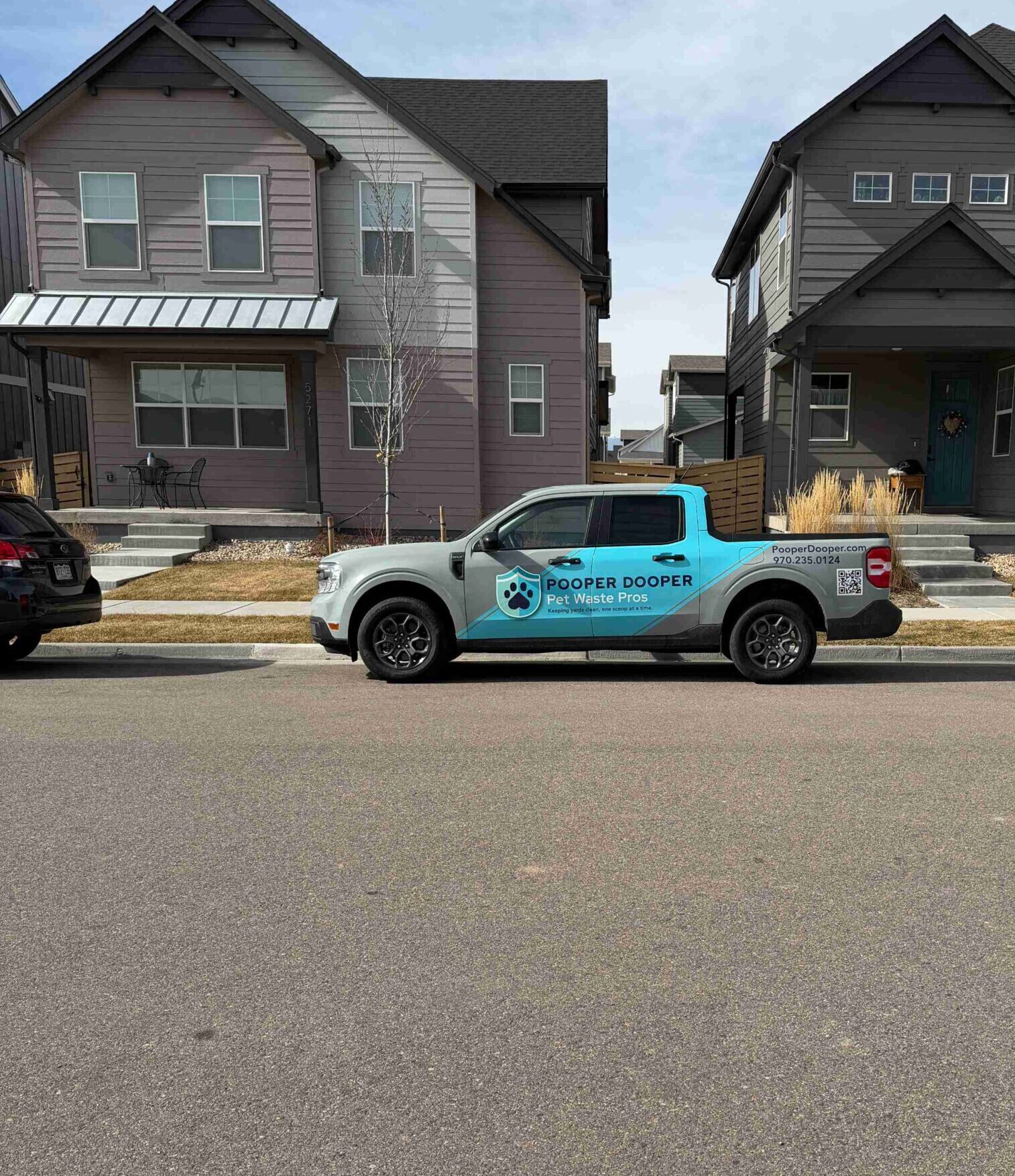
This is the question we get more than any other once the weather turns, and most of the answers online are useless because they are written for climates that do not have ours. Northern Colorado winters are not mild and they are not consistently brutal either. We get hard freezes, we get big storms, and we get sixty degree afternoons in January that melt everything down to bare grass.
That variability is what makes the winter decision genuinely situational rather than obvious. Here is how we walk clients through it.
What Actually Changes in Winter
Three things, and they pull in different directions.
Volume drops. Dogs spend less time outside, so there is less to collect per week than in July. That is the part that works in your favor.
Findability drops harder. Fresh snow covers everything. Waste freezes into the ground and into ice layers. A visit two days after a storm finds a fraction of what the same visit would find on bare grass, and any service that tells you otherwise is overselling.
Accumulation compounds. This is the part people underestimate. Nothing decomposes at thirty degrees. Everything that lands between the first storm and the spring thaw is still there, in layers, waiting.
The Case for Running Service Through Winter
Winter service makes clear sense in a few specific situations.
You use the yard. If dogs are going out four or five times a day, if kids play in the snow, if you are out there with a shovel clearing paths, then the yard is in active use and accumulation is a present problem rather than a future one.
The yard is small. In a compact Fort Collins or Loveland lot there is nowhere to route traffic away from the accumulation. Small yards concentrate everything, and they hit an unusable point far sooner than a quarter acre does.
You have multiple dogs. Three or four dogs across four winter months produces a spring cleanup that is genuinely daunting. Spreading that work across the winter is easier on the yard and easier on the schedule.
You want a usable yard in March. This is the one clients mention most in hindsight. Northern Colorado gets warm stretches in March that make everyone want to be outside, and a yard that had service through winter is ready for that. A yard that did not is a project.
The Case for Pausing
Pausing is a perfectly reasonable choice, and we say so.
If the dogs go out briefly and come back in, if the yard is large enough that accumulation stays in one area, if nobody is using the space between December and March, then paying for visits that find limited material under snow is hard to justify. Take the pause, plan for a real first-of-season service, and put the money there instead.
The one thing we ask is that the pause be a decision with a spring appointment attached to it, rather than a drift. Clients who book their first-of-season service in advance get the date they want. Clients who call in mid April are competing with everyone else who waited, at the busiest point in our year.
What Winter Visits Actually Look Like
They are different work from summer visits, and it helps to know that going in.
Timing follows the weather rather than a strict calendar. The most productive window is a day or two after a melt, when bare ground is exposed, and we will often shift a visit to catch that rather than arrive during a storm.
Coverage is honest about snow. On a yard under six inches of fresh cover, we clear what is reachable and findable, and we tell you that is what happened. Nobody benefits from pretending a full clearing occurred.
Frequency usually loosens. Clients on weekly summer service commonly move to bi-weekly or a flexible winter cadence. The point is preventing compounding, not achieving a spotless yard in February.
The Spring Math
This is the part worth being direct about, because it is where the real cost difference lives.
A first-of-season cleanup after a full winter pause is not a routine visit. On a multi-dog yard it is a substantially larger job, priced accordingly, and it takes considerably longer. That is not a surcharge, it is the actual work of clearing four months of layered accumulation off a thawing lawn.
So the comparison is not winter service versus nothing. It is winter service spread across four months versus one large service in April. For some households the totals land close enough that the deciding factor is simply whether they want a usable yard in the meantime. For others, particularly single-dog households with large yards, the pause is clearly cheaper.
What we will not do is quote you a winter plan without asking how many dogs you have and how big the yard is, because those two numbers change the answer completely.
A Word on Frozen Waste and Lawn Damage
One practical detail that surprises people: waste frozen into turf cannot be removed without damaging the grass, and we will not force it. If material is locked into ice, it waits for a melt.
This is another argument for the September baseline clearing covered in our fall reset guidance. What is on the ground when the first hard freeze arrives is what stays there. A yard cleared thoroughly in late September starts winter from zero.
What Winter Accumulation Does to the Turf
There is a lawn cost to a full winter pause that does not show up until spring, and it is worth factoring in.
Waste sitting on turf through winter holds nitrogen and moisture against the crown of the grass plant for months, under snow cover that blocks light entirely. That is a reliable recipe for dead patches, and the patches show up in exactly the areas the dogs used most, which are usually the areas that were already thin.
Snow compaction makes it worse. Foot traffic and dog traffic across snow-covered turf presses the whole layer down into a dense mat, and anything underneath is pressed into the crown with it. Clients who pause through winter and then need spring reseeding are often paying for the reseeding on top of the larger cleanup.
None of that makes pausing wrong. It just means the comparison should include the spring lawn repair, not only the spring cleanup, when the yard is one you care about the look of.
Multi-Dog Households Are a Different Calculation
Everything above shifts when you move from one dog to three or four, and it shifts faster than people expect.
Volume scales linearly with dog count, but usability does not. A single dog on a quarter acre spreads its use widely enough that a winter of accumulation stays tolerable. Four dogs on the same yard concentrate on the same paths and corners, and those areas become genuinely unusable by February rather than merely untidy.
The spring job scales the same way. A four-dog first-of-season cleanup after a full pause is among the largest single services we do, and it is the one where clients most often say they wish they had run something through the winter instead.
Our general guidance: one dog, a pause is usually fine. Two dogs, it depends on yard size and use. Three or more, a reduced winter cadence almost always comes out better on both cost and outcome.
Frequently Asked Questions About Winter Service
Do you run service during and after snowstorms?
We work around them. Visits get shifted toward melt windows when bare ground is exposed, because that is when the work is actually productive. During heavy cover we may reschedule rather than charge for a visit that cannot accomplish much.
Is winter service cheaper than summer service?
Per visit it generally reflects the lower volume, and many clients also drop to a lower frequency, so the monthly cost usually comes down. The specifics depend on your yard, your dog count, and the cadence you choose.
If I pause, when should I book the spring cleanup?
Book it when you decide to pause, in the fall. Spring first-of-season slots fill fast once the weather breaks, and the clients who called in advance get the early dates.
Can I pause and then restart mid winter if it gets bad?
Yes, and it happens fairly often, usually in January when someone realizes the yard has gotten away from them. Restarting mid winter means the first visit back is a catch-up rather than a routine stop, so it is worth calling sooner rather than later.
What to Do Next
The decision is easier than people expect once you answer two questions honestly: how much will you actually use the yard between December and March, and how many dogs are contributing to it. Tell us those and we will give you a straight recommendation, including telling you to pause if that is the better value.
Call us at (970) 235-0124 or visit pooperdooper.com to set your winter plan. We serve Fort Collins, Loveland, Windsor, Timnath, Wellington, and the surrounding Northern Colorado communities, and winter schedules are set in the fall.