Why Some Northern Colorado Lawns With Dogs Stay Green and Others Burn: 4 Yard Habits That Decide
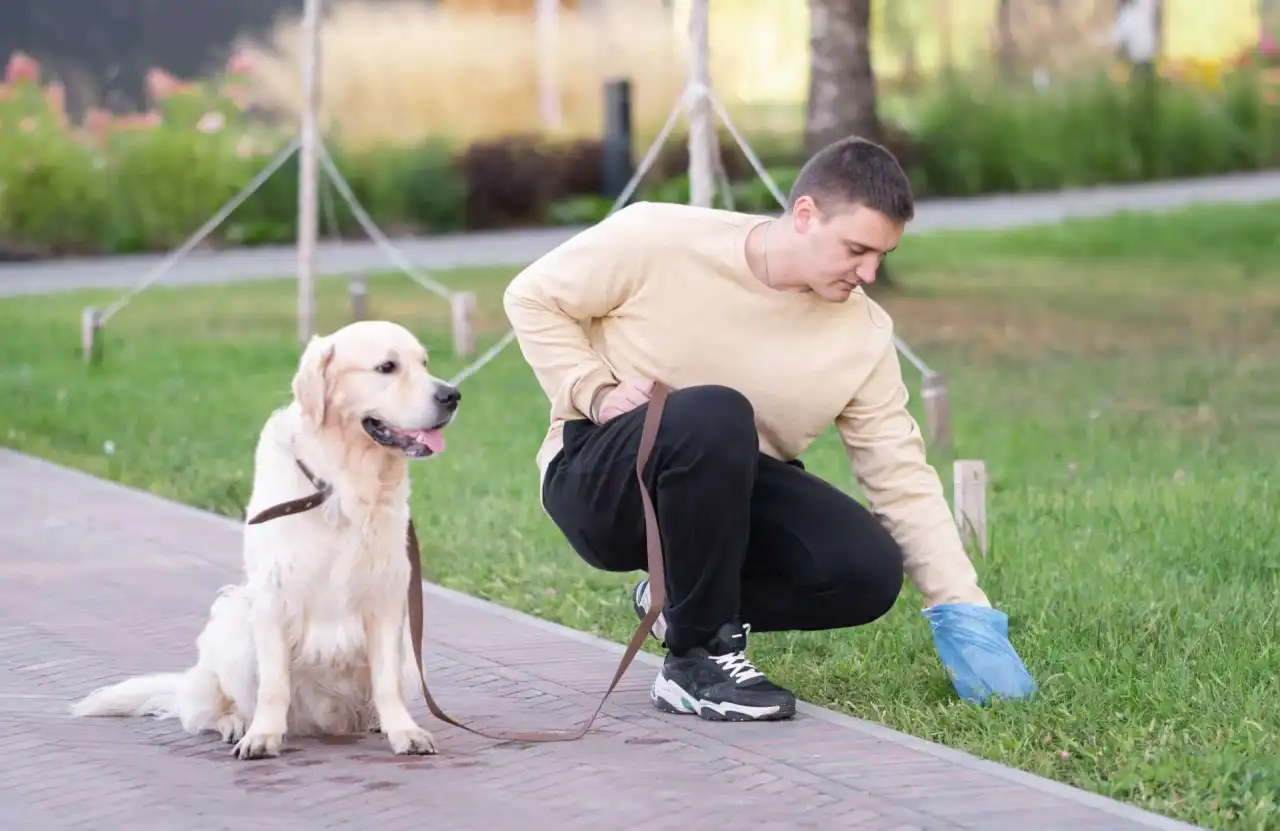
Short Answer: The difference between a Northern Colorado lawn with dogs that stays green through summer and one that turns into a patchwork of burn spots comes down to four habits the homeowner controls. Watering pattern relative to dog use. Scoop timing relative to urine concentration. Soil chemistry maintenance to handle the nitrogen load. And use rotation so no single area absorbs the full traffic. Yards that practice all four routinely stay green even with three or four dogs. Yards that practice none typically have brown patches by mid summer regardless of dog count. The good news is that all four are habits, not large investments.
We walk a lot of yards across Fort Collins, Loveland, Windsor, Timnath, and Wellington each week. We see the full range of conditions from yards that look pristine despite three large dogs to yards with one small dog that are essentially dirt by August. The dog count is not the variable that decides which is which. The variable is what the homeowner does with the four habits this article covers.
This is not a sales article for our service. Scoop service helps with one of the four habits and indirectly with another. The other two are entirely on the homeowner. We are writing this because we get asked the question often enough by clients across Northern Colorado, and because the answer is genuinely useful regardless of whether anyone hires us. Lawns with dogs can stay green. The habits are the difference.
Habit One: Watering Pattern Relative to Dog Use
Dog urine burns lawns through a specific mechanism. Concentrated nitrogen and salts in the urine reach grass crowns and roots at levels that damage the plant. The damage looks like a circular brown patch with a brighter green ring around the edge where the dilute outer urine actually fertilizes rather than burns. Most homeowners have seen this exact pattern.
The fix is dilution. Water on a urine spot within an hour or two reduces the concentration enough that the lawn shrugs it off instead of burning. Water 24 hours later does very little.
For yards with dogs, this changes the irrigation calculus. The standard Colorado advice of two cycles per week, deep watering, in the early morning is correct for the lawn itself. But for dog-trafficked areas, an additional light watering pattern through midday or evening can make the difference between burn spots and clean turf.
The yards that stay green typically do one of three things. Some homeowners hand water the dog area lightly after the dog goes out, especially in the morning. Some have a separate irrigation zone for the high-traffic dog area that runs more frequently than the rest of the lawn. Some use a hose end soaker that runs for 10 minutes on the dog area twice a day in addition to the main system schedule.
What does not work. Heavy daily irrigation across the whole lawn. That creates shallow rooting and weakens the lawn against summer heat, which makes the urine damage even worse. The lawn needs deep irrigation for general health and supplemental targeted dilution for the dog traffic specifically.
Habit Two: Scoop Timing Relative to Urine Concentration
This one is where our service connects. Pet waste itself does not burn the lawn the way urine does. The waste burn comes from prolonged contact, which causes nitrogen burn and physical smothering, but the timeline is days to weeks rather than the immediate window urine creates.
Where scoop timing matters for lawn health is the relationship between solid waste and urine. Dogs often urinate near or on the same spots they defecate. Waste sitting on the lawn marks the area as a return destination. The dog comes back, urinates again, and the urine concentration in that specific spot multiplies. The lawn under that spot takes the cumulative damage.
Yards on consistent weekly or twice-weekly scoop service have less spot-specific urine concentration because the waste cues do not persist long enough to create return destinations. Yards on bi-weekly or sporadic service develop hot spots where the same patches of lawn take repeated urine damage over the course of a week or two.
This is also why catch-up cleanups produce yards with visible damage patterns. The areas that accumulated waste for several weeks before service started often have dead grass underneath even after the cleanup. The recovery requires watering the area aggressively and sometimes reseeding if the damage went too deep.
The practical timing rule: shorter intervals between scoop visits means less concentrated urine return-traffic. The lawn benefit is real even though it is indirect.
Habit Three: Soil Chemistry Maintenance
This is the habit most homeowners do not think about. Repeated dog urine over time changes the soil chemistry under the lawn. Nitrogen levels rise. Salt concentrations rise. Soil pH can shift. Beneficial microbes can decline. The lawn loses its ability to recover from individual urine events because the underlying soil is already stressed.
The fix is periodic soil testing and targeted amendments. For Northern Colorado lawns with dogs, we recommend a soil test once every two or three years. The test costs $30 to $50 through a local lab or extension service. The results tell you exactly what your soil needs, which is almost always more nuanced than what generic lawn fertilizer assumes.
Common findings in dog yards. Elevated nitrogen, which counterintuitively means you should fertilize less, not more. The dogs are providing significant nitrogen through urine. Adding more from a bag is what tips the lawn into burn-vulnerable territory.
Elevated salts. The fix is gypsum applied lightly, which helps displace the salts and improve soil structure. Most Colorado soils tolerate gypsum well.
Compaction in high traffic areas. The fix is core aeration in spring or fall, which we recommend for any heavily used lawn regardless of dog count but especially for dog yards.
For homeowners who want a simpler version of this. Apply less fertilizer than the bag recommends for any lawn with dogs. Half the recommended rate is often the right answer. The dogs are doing more of the work than you realize.
Habit Four: Use Rotation
The fourth habit is the one that requires no products and almost no money but takes the most behavior change. Dogs left to their own preferences typically use the same favored areas of the yard repeatedly. The favored area takes the full traffic load. The rest of the yard is barely used. The high-use area burns and dies. The rest of the yard stays green but is unused.
The yards that look uniformly green almost universally have some form of use rotation. The most common approaches:
Designated bathroom areas. Some homeowners train dogs to use a specific area of the yard, often a mulched zone or a gravel area, rather than the lawn. This works for some dogs but is hard to retrain older dogs to.
Active redirection. The homeowner notices when the dog is heading for the favored spot and redirects to a different area. Over weeks, the traffic spreads out. This takes consistent attention but no money.
Yard zoning. Some homeowners use temporary fencing to rotate which section of the yard the dogs have access to. Section A is open for two weeks, section B for two weeks, alternating. This is more common for owners of multiple dogs.
Time-of-day rotation. Some homeowners take the dogs on a walk for morning bathroom needs and use the yard only for afternoon outings. This dramatically reduces the urine load on the lawn because the most concentrated morning urine is deposited elsewhere.
None of these are perfect. All of them help. The yards that look the best typically combine two or three of these approaches.
What These Four Habits Do Together
The four habits compound. Watering reduces individual burn events. Scoop timing reduces return traffic concentration. Soil chemistry maintains the underlying health. Use rotation spreads the load. The yards that practice all four can support three or four dogs without visible damage. The yards that practice none typically show damage with even one or two dogs.
To put this in concrete terms, here is what we see across our service area. A typical Fort Collins yard with two medium dogs, no specific habits, on bi-weekly scoop service. Visible burn patches start appearing in May and worsen through August. The lawn is usable but visibly stressed. The owner usually accepts the damage as the price of having dogs.
The same yard with two medium dogs, weekly scoop service, supplemental morning watering on the dog area, use rotation between three zones, and soil amendments based on a test. The lawn looks essentially indistinguishable from a no-dog yard. We have multiple clients in this category and the difference from the first scenario is striking.
The cost difference between the two scenarios is modest. The labor difference is some attention but not a lot of time. The result is a lawn that is genuinely green rather than chronically damaged.
What to Do About Existing Burn Spots
If your lawn already has burn spots from the first half of summer, here is the recovery sequence.
Water the affected area heavily for several days. Sometimes the grass is dormant rather than dead. Watering reveals which is which within a week.
For spots that do not recover, light core aeration of the specific area helps the soil release accumulated salts and lets new grass establish. You can do this with a hand tool for small areas.
Reseed in early September. Mid summer reseeding rarely takes in Northern Colorado conditions. Wait for the temperature drop in late August and seed during the cool window of September.
Adjust the four habits for the rest of the season so the new spots do not redevelop. Especially the watering and use rotation pieces.
What Pet Waste Service Does and Does Not Do for the Lawn
Honest about our role. Scoop service helps with one of the four habits directly and contributes indirectly to another. It does not solve lawn burn from urine on its own. A homeowner who hires us weekly but does nothing else about watering, soil chemistry, or rotation will see less waste-related damage but will still see urine burn spots.
Where we make a real difference: keeping the bacterial and waste cues from concentrating return traffic. Reducing the long term soil load from accumulated waste. Allowing the lawn underneath the cleaned areas to maintain coverage instead of dying from prolonged smothering.
Where the homeowner has to take it the rest of the way: watering, soil testing and amendments, and use rotation. We can advise on all three but the implementation is on the homeowner.
Frequently Asked Questions
Do certain grass types handle dog traffic better than others?
Yes, somewhat. Kentucky bluegrass varieties recover from damage faster than fine fescues. Tall fescue holds up under traffic better than most cool season grasses but does not spread the same way. Most Northern Colorado lawns are a Kentucky bluegrass or bluegrass blend, which is a reasonable choice for dog yards if maintained properly.
Are there products marketed as urine neutralizers that actually work?
Mixed evidence. Some products are essentially gypsum and a binder. Those provide a modest benefit similar to a soil amendment. Some are nothing more than expensive water. The free habits we describe in this article have more measurable effect than any product we have tested.
Should I let my lawn go dormant if I have dogs?
Possible strategy. A dormant lawn does not show urine damage in the same visible way because the dormancy itself is brown. The risk is that the underlying soil chemistry still degrades. We recommend keeping the lawn active and managing the four habits rather than letting the lawn go dormant.
Will artificial turf solve all of this?
It solves the urine burn issue but introduces other issues. Heat retention is significant on Colorado summer days. Bacterial buildup in turf infill requires its own cleaning regimen. Urine on turf needs rinsing the same way urine on lawn benefits from rinsing. For some yards artificial turf is the right answer. For most, well-managed real grass is the better choice.
How often should I aerate a lawn with multiple dogs?
Annually is reasonable for heavily used dog yards. Spring or early fall is the best timing in Northern Colorado. Core aeration rather than spike aeration. The cost is modest and the lawn benefit is significant for compacted dog yards.
What to Do Next
If you want to put the four habits into practice for the rest of summer, the place to start is honestly assessing which ones you already do and which ones you do not. Most homeowners have one or two of the four in some form. Adding the missing pieces is usually the difference between a lawn that struggles and a lawn that stays green.
For the scoop service piece specifically, we are happy to help. Call us at (970) 235-0124 or visit pooperdooper.com to schedule. We serve Fort Collins, Loveland, Windsor, Timnath, Wellington, and the surrounding Northern Colorado communities. We can typically have an initial visit on the calendar within a week. We will also tell you, honestly, if our service is not what your specific yard needs and point you in the right direction either way.